.avif)
The European digital workplace platform for better employee experiences, smarter IT operations, and work without friction.


Solutions
In every enterprise engagement survey, there's a comment like this one, buried in the free text: "My laptop takes four minutes to wake up."
That comment is the whole DEX vs employee experience platforms debate in one line. Your EXP has captured the frustration, but it can’t tell you the cause or how many other employees are facing the same issue.
If you're a CIO, Head of IT, or Digital Workplace leader, you've probably seen this disconnect in the form of:
The terms are often used interchangeably, but DEX platforms and employee experience platforms solve different problems.
One helps organizations understand how employees feel about work, while the other reveals how the workplace technology they rely on is actually performing.
This article tries to make clear the distinction between the two, including what each tool measures and who owns it inside the organization, so you can tell which problem you're actually solving before the budget conversation starts.
Want to turn DEX into an operational advantage? Book a demo with Flexxible to find out how you can use vital data to deliver measurable results to your business.
Employee experience platforms operate within the HR-owned layer of the workplace. They bring together the people, communications, and HR services that influence an employee's day-to-day experience throughout their time with an organization.
This covers the whole employment lifecycle, including:
Workday, Qualtrics, or ServiceNow's HR service delivery modules are typical examples of software that help companies measure and improve these aspects of working life.
These systems rely on the information the employees give you. Most commonly, this comes from pulse surveys, annual engagement studies, exit interviews, and sentiment scores from written feedback.
The data helps leaders understand how their employees feel about their workplace culture and their relationships with managers. It gives an insight into employee retention: after all, unhappy staff don’t tend to stick around.
Employee experience software typically gathers insights periodically, and its findings depend on which people respond and how much they share. For this reason, they tend to be a snapshot of workforce sentiment rather than continuous visibility into an employee’s technology experience.
A DEX platform is software that helps organizations measure and improve the technology that employees use and employees’ experience of it.
Digital employee experience tools do this by collecting important telemetry from every endpoint continuously. This includes, but is not limited to:
They then generate a composite DEX score by combining this data analysis with employee feedback. This score reflects two things: how the digital estate is performing and how employees feel about using it.
Flexxible, Nexthink, and ControlUp are all important operators in the DEX field.
Perhaps the best way of comparing DEX vs employee experience platforms is to see them as two layers of the digital workplace.
Employee experience platforms are the listening layer: they capture how employees feel about their work.
DEX platforms for enterprises are the diagnostic and action layer: they show how the technology behind that experience is performing and affecting their experience.
We can break this difference down into five areas.
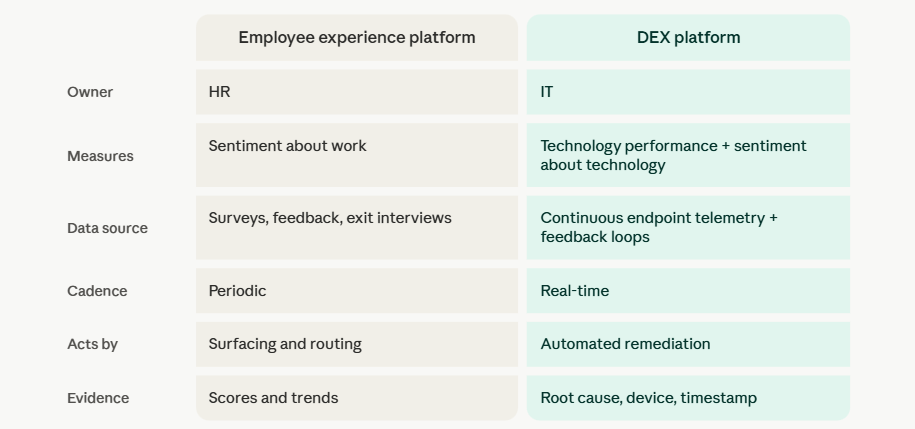
EX platforms gather and measure sentiment: how people feel about their workplace and its culture.
DEX tools put real-time analytics together with employee sentiment analysis to gauge the technology experience and how it impacts employees’ daily lives.
The EX suite usually falls under HR’s remit, while IT owns the DEX platform. Ownership is key because it determines budget responsibility, priorities, and whether insights become action or simply reporting.
Employee experience platforms surface feedback and highlight trends.
DEX platforms can go further by helping IT teams diagnose and resolve issues through intelligent automation, self-healing, and remote remediation.
Flexxible is a leading example of this.
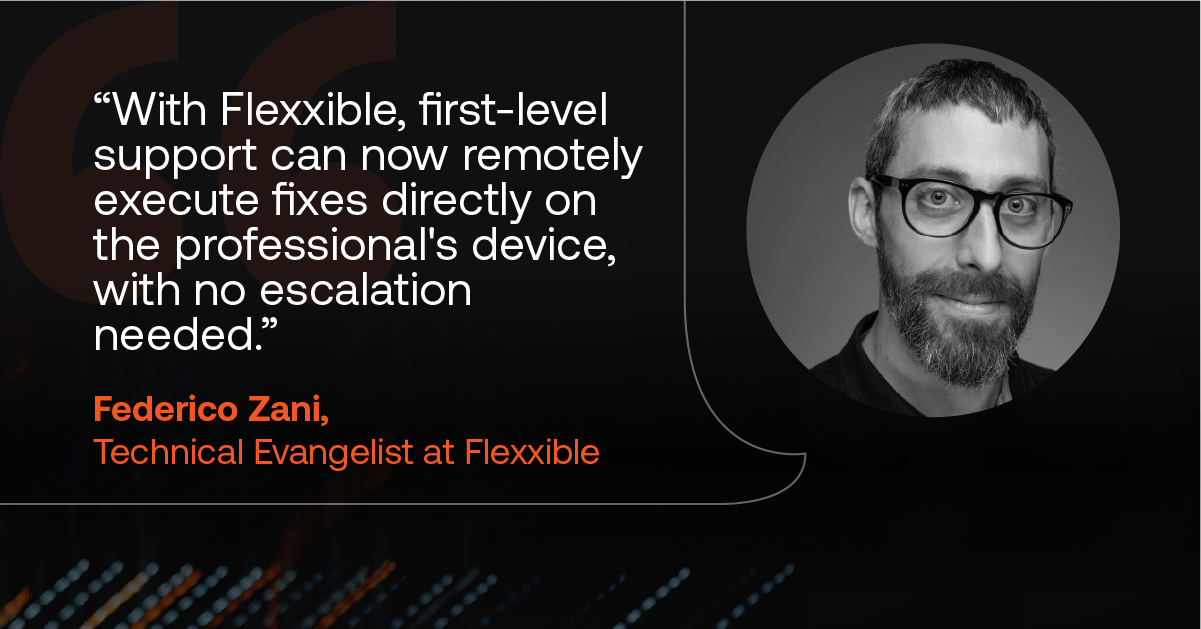
"With Flexxible, first-level support can now remotely execute fixes directly on the professional's device, with no escalation needed," says Federico Zani, Technical Evangelist at Flexxible. "With one recent client, the average resolution time dropped from 1.8 days to just 8 minutes."
Measured across deployments, that shows up as:
Modern digital estates are a complex and sprawling network composed of physical endpoints, VDI, Microsoft 365, mobile access, and whatever shadow IT grew in the gaps.
DEX platforms correlate data across these environments to show what employees are actually experiencing. They monitor endpoint health, application performance, and infrastructure issues – areas that EX tools can’t reach.
GDPR, data residency, and sovereignty requirements are IT challenges that have direct consequences on the employee experience. It means that organizations must have strong governance and auditability built into their DEX strategy – regional hosting, too, gives extra assurance.
Many enterprise leaders believe the two platforms are competitors, but thinking in terms of DEX vs employee experience platforms misses the point. They both answer different questions, and mature organizations know how to run both.
The key is to use them in the correct sequence. Once you understand the cause of digital friction and fix it, you can measure the feeling.
Scale matters here too, and not in the direction many leaders might assume.
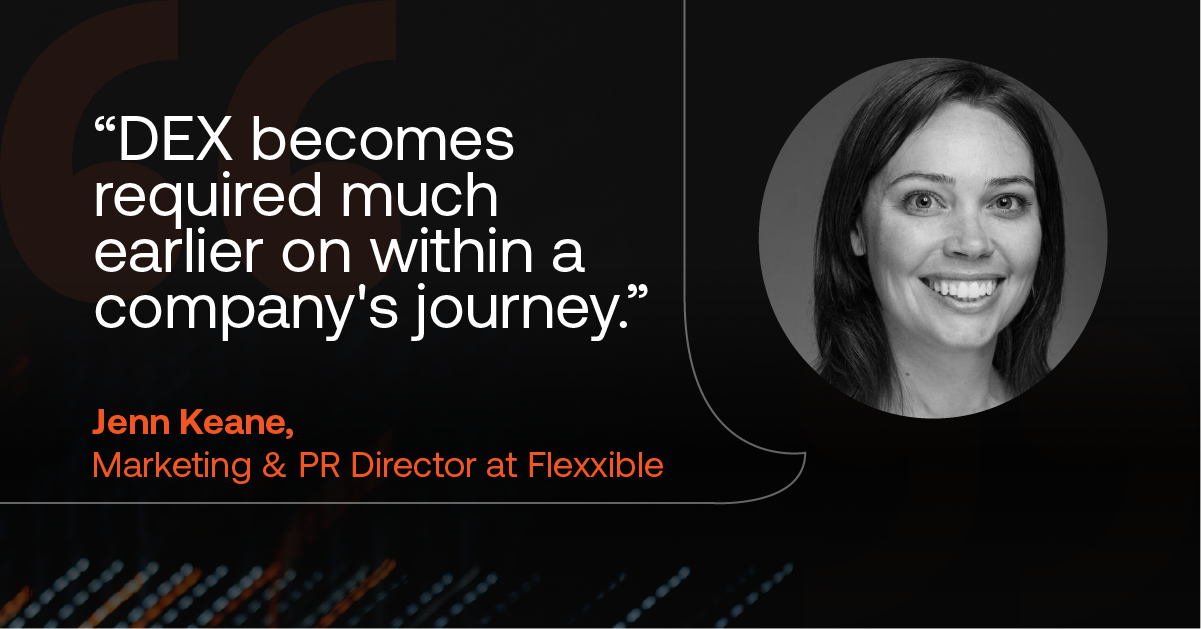
"EX tools are often used in very large businesses that are looking for employee feedback surveys, generally where they're trying to be a great place to work," says Jenn Keane, Marketing and PR Director at Flexxible. “DEX becomes required much earlier on within a company's journey.”
Here’s how the two sit next to each other.
Get the digital employee experience layer right, and the EX suite starts measuring something real: culture, management, purpose – all things that surveys are designed to measure.
Most enterprises don’t have a full DEX gap but a stack of tools that each only sees a slice of it.
FlexxClient is the control layer that joins them. Physical endpoints, virtual desktops, applications, security posture and employee feedback – one console, one agent, one view of what your workforce is actually experiencing.
IT leaders get access to:
Your EX platform can keep measuring how work feels. FlexxClient makes sure the technology underneath it stops being the reason the answer is bad.
Ready to see how a leading DEX platform can maximize your workforce productivity? Book a demo today and see how FlexxClient turns DEX data into productivity, satisfaction, and measurable ROI for your organization.
Employee experience platforms measure how employees feel about their workplace. DEX platforms measure how workplace technology performs and the interaction between those technologies and the employees, helping IT teams identify, diagnose, and fix the digital friction behind poor experiences.
DEX platforms are typically owned by IT because they monitor endpoints, applications, and infrastructure. Employee experience platforms usually sit with HR because they focus on engagement, culture, communication, and workforce sentiment.
Employee experience platforms capture employee feedback, but they usually lack real-time endpoint telemetry. DEX tools connect complaints to specific devices, applications, and performance issues so IT can take action.
Gartner’s 2025 Magic Quadrant for Digital Employee Experience Management Tools recognized vendors including Flexxible, Nexthink, and TeamViewer among evaluated DEX software providers.


Book a personalized demo or tell us what’s getting in the way.
We'll find the solution together.