
We tend to see digital workspace solutions as productivity tools, but for IT leaders, they’re also about something harder to measure: control over a work environment that no longer sits in one place.
The modern digital workplace is fragmented across devices, platforms, and user expectations that move around faster than most IT environments can keep up with.
If you’re responsible for these ecosystems, you’ve probably felt pressure in three critical areas:
- Limited visibility across the workplace, with a lack of real-time insight into user experience and performance
- Reactive operations, as IT teams are chasing their tails fixing issues, instead of preventing them
- Inconsistent experiences across the workforce as employees grapple with different tools, speed, and supporting levels depending on where they work
The good news is that leading digital workspace technology does more than ease these pressures, but also removes the conditions that create them.
Read on to find out about five core digital workspace essentials that achieve a more consistent and secure experience across a remote and hybrid work environment – and how Flexxible delivers all of them.
Contents:
- What’s the Difference Between Digital Workspace and a Digital Workplace?
- 5 Digital Workspace Essentials That Improve Enterprise Performance
- Maximise Your ROI With Flexxible’s Unified Platform
Flexxible brings together multiple core digital workspace solutions into one platform.
Book a demo to find out how we can transform your remote workforce’s productivity – and give you more control.
What’s the Difference Between Digital Workspace and a Digital Workplace?
Digital workspace and digital workplace solutions are two terms that IT professionals tend to use interchangeably and sometimes mix up, yet they hold an important difference when it comes to forming enterprise strategy.
What is a digital workplace?
A digital workplace is a broad ecosystem that spans remote work, in-office environments, and everything in between.
Within it, you’ll find enterprise processes, company culture, and the technology it uses to support a flexible workplace. It also includes collaboration tools like Microsoft 365 or Google Workspace, video conferencing, as well as the policies that govern data privacy, cybersecurity, and employee productivity.
A good way to think of it is like a city, with infrastructure and rules that keep everything ticking along smoothly.
What is a digital workspace?
A digital workspace is the operational layer within the ecosystem we’ve just described. This is the interface where the end user, or employee, comes into contact with tools and applications, which is why access security, automation, and technical support are so important – they come together to shape the overall digital employee experience.
To use the metaphor above, the digital workspace is the individual buildings and roads employees actually use to get their work done each day.
Only by knowing this difference can we then start to look at optimizing the workspace layers, or the operational foundations that power it.
5 Digital Workspace Essentials That Improve Enterprise Performance
1. Unified Digital Workspace Management Platforms
In their rush to scale, many organisations quickly gather tools – think Microsoft 365, Google Workspace, various device managers, and multiple security layers. These all solve specific problems, but they operate in silos, rarely communicating with each other. The result is a fragmented digital workplace where IT teams struggle to maintain consistent visibility across devices and users.
“Without a holistic platform, IT teams struggle with inconsistent data, shadow apps, and visibility gaps that increase risk and reduce agility,” says Gregory Shein, CEO at Corcava, a business software tool.
When IT support comes in to address these issues, their view is clouded by that fragmented oversight. Enterprise processes fall out of sync, and IT teams are left reacting to issues without a clear understanding of where they originated.
A unified digital workspace management platform solves this by providing infrastructure observability: real-time visibility and control across all endpoints – hardware, software, performance, and connectivity – brought together in a single control layer. IT teams get a clear picture of what's happening across all devices, applications, and users, enabling them to quickly identify the root cause of friction before it escalates.
FlexxClient, Flexxible’s main product, delivers this through a centralised console that automatically tracks every device and application in real time. IT teams can view system performance, user sessions, alerts, and resource usage in one place, leading to better, faster decision-making and more proactive issue resolution.
With this continuous oversight, IT staff no longer need to chase problems. Instead, they have the full visibility required to identify root causes before impacting the user experience.
2. Automation and self-healing IT workflows
Reactive IT is one of the biggest barriers to employee productivity, but it’s also one of the most avoidable.
Digital workspaces are moving towards the automation of processes for a reason: they put IT on the front foot.
Smart automation detects and resolves common issues without the need for humans to get involved. To do this, it uses continuous diagnostic insight to track spikes in usage and sudden drops in performance. Then, it provides the data for an IT admin or director to produce AI reports to identify recurring patterns in performance data so that automations can be configured to prioritize fixes based on impact
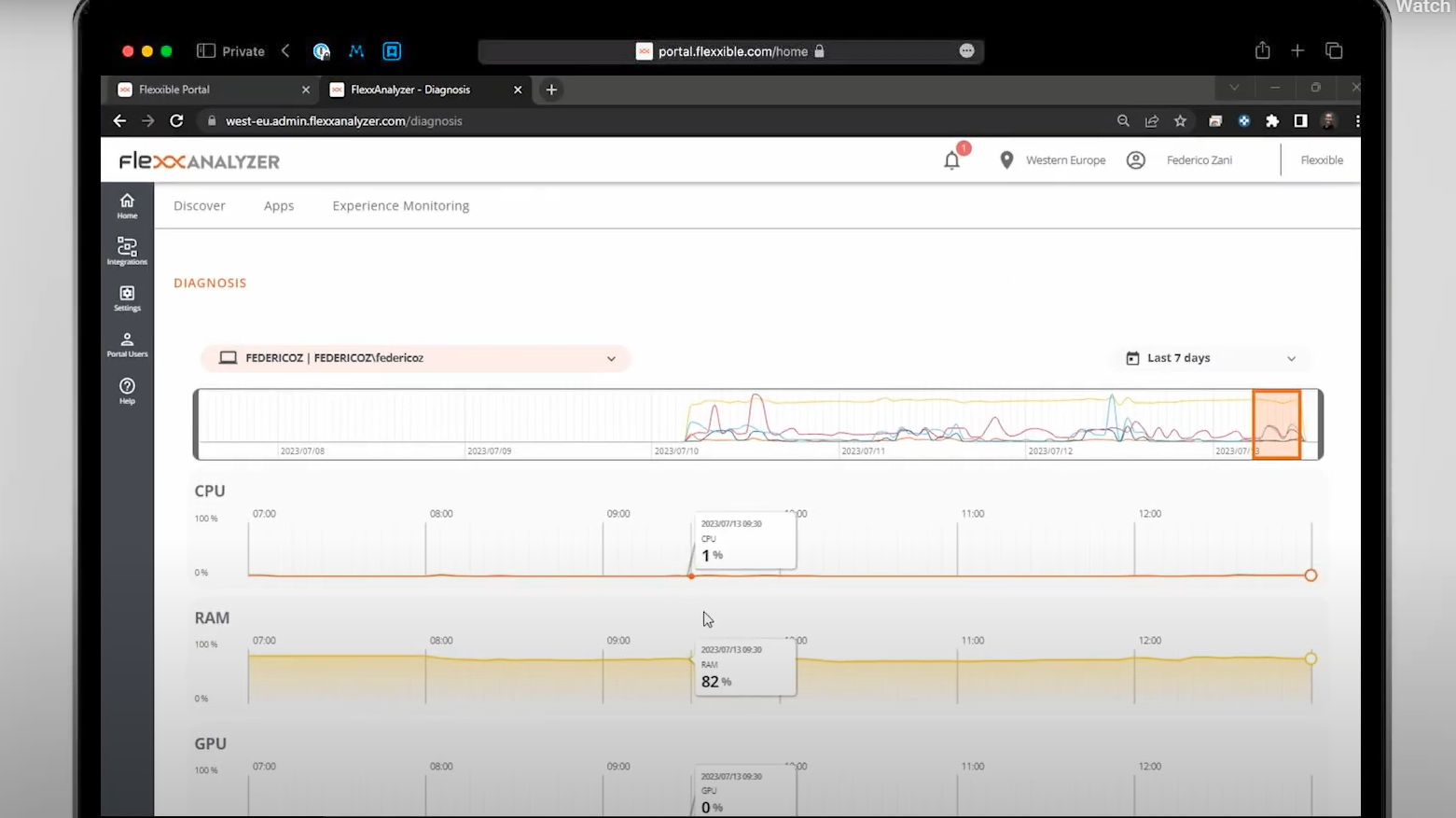
FlexxClient, for example, tracks CPU, RAM, and GPU levels in real-time and combines them with historical data to pinpoint exactly when and where performance starts to deteriorate. It triggers targeted fixes instantly, before the user even notices.
How FlexxClient Analyses Performance Levels in Real Time
There’s also a self-service option so that users can resolve minor issues manually. Think password resets or application restarts that are better for them to perform themselves.
“With Flexxible, first-level support can now remotely execute fixes directly on the professional's device — no escalation needed,” says Federico Zani, Technical Evangelist at Flexxible. With one recent client, the average resolution time dropped from 1.8 days to just 8 minutes, giving professionals back more than a day of productive work time per incident.”
This first-line resolution brings down pressure on IT teams and encourages a culture of continuous improvement across the enterprise.
The result? Less downtime, fewer bottlenecks, and a more resilient IT function.
3. Real-time monitoring and digital experience analytics
Most organisations wait for their staff to report problems, but this already creates the friction that causes the digital employee experience to drop.
High-performing digital workspaces, like those using FlexxClient, remove this by flagging issues in real time before they develop. They do this via deep monitoring capabilities that track system performance via the following metrics:
- CPU
- RAM
- GPU usage
- Network latency
- Application behavior across its lifecycle
Just look at how FlexxClient’s dashboard gives IT teams a live view of what’s happening across the digital workplace, including active sessions, performance trends, and real-time alerts across users and systems.
How FlexxClient Lets IT Leaders Monitor Their Workspaces In Real Time
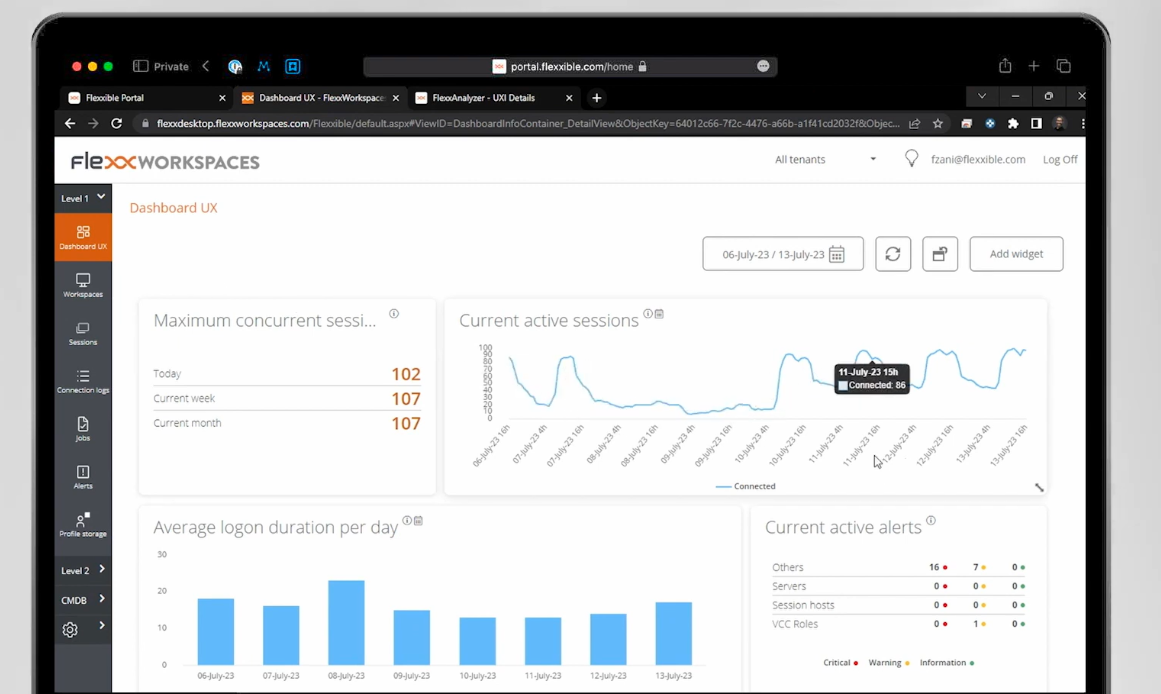
This connects directly to the employee experience because it lets IT leaders see how the systems are performing from the user’s perspective, not just a bird's-eye view from the infrastructure level.
With this insight, IT quickly goes from reactive support to a proactive, data-driven function.
4. Embedded cybersecurity
An expanding workforce is an exciting opportunity for an organisation, but it also comes with new threats. As the workplace becomes larger, its attack surface also expands: employees log in from multiple locations, new devices, and even new networks.
Cybersecurity and data privacy are two essential security pillars that must be embedded into a growth strategy, yet many traditional approaches layer it on top superficially. In the EU, for example, all organisations must comply with GDPR requirements to protect personal data and prevent unauthorised processing or breaches.
Flexxible integrates Crowdstrike directly into the workspace layer. This agile security module combines endpoint protection with workspace management and automated support, all from a single console.
The result is an IT team that can secure, monitor, and remediate threats across every endpoint in real time, without switching between platforms or losing sight of the bigger picture.
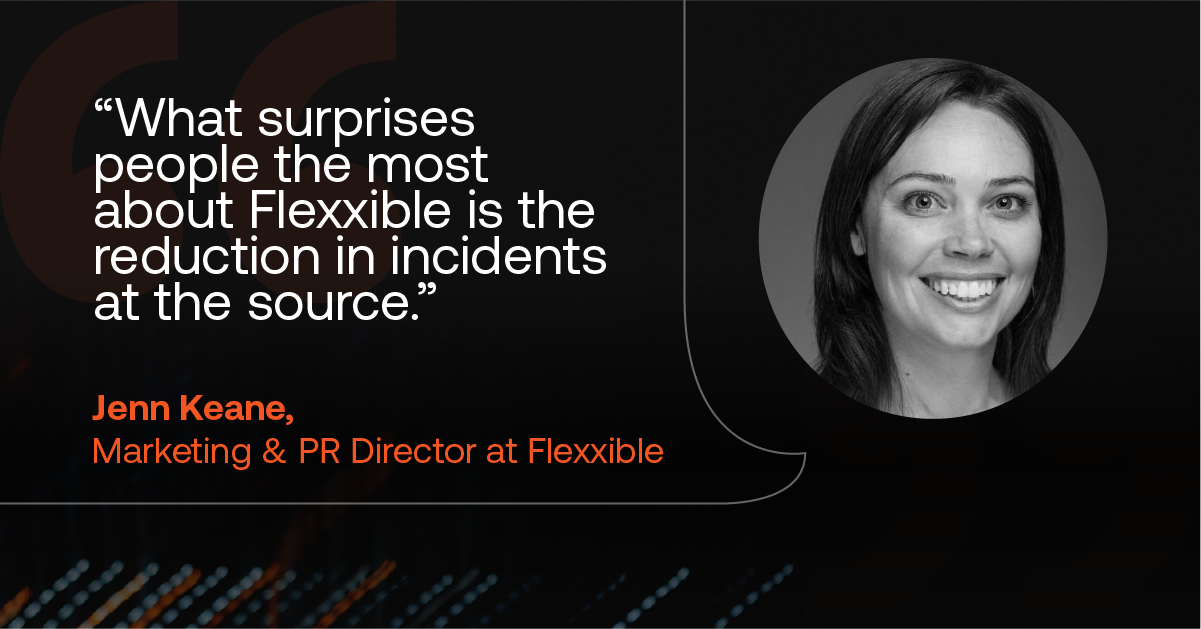
There’s another potentially surprising benefit, too. “What surprises people the most about Flexxible is the reduction in incidents at the source,” says Jenn Keane. “This is thanks to real-time information and the immediate, automatable reports.”
With fewer issues escalating into risks, and faster response when they do, organisations can maintain a secure environment without disrupting the user experience, striking the balance modern enterprises depend on.
We can measure the impact of these integrated solutions in the form of:
- 19% of tickets resolved automatically
- 65% of issues are diagnosed faster
- 78% of lost employee time recovered
Flexxible brings down risk without disrupting user experience – the golden ticket for IT leaders at growing enterprises seeking to create a seamless and secure environment for modern work.
5. DEX scoring with direct employee feedback
You can’t improve what you don’t measure, but in many digital workplaces, the user experience is still a blind spot. Employee tickets and complaints only tell part of the story because they capture problems after they’ve already impacted employee productivity.
Continuous digital experience scoring is a feature that many modern digital workspace solutions use to address this skewed system. It doesn’t do away with employee feedback, but instead combines it with experience analytics to give the clearest picture possible about how employees perceive their tools and environments.
FlexxClient uses built-in feedback loops and experience analytics to get these precious insights. IT teams can track trends across devices, applications, and workflows to build a measure, experience-led view of the workplace; one that shows friction points and the opportunities for improvement.
This makes locating the changes that can have the greatest impact on the workforce much easier, instead of simply reaching isolated incidents. When in tandem with the other features mentioned, it offers IT leaders the quickest route to what matters most: achieving a better, more consistent experience for each employee.
Unify Your Digital Workplace With Flexxible – and Turn Performance into ROI
Each one of the above digital workspace solutions solves a specific problem, yet this doesn’t mean much if they don’t work together to improve your digital workplace – and user experience.
Flexxible brings them under one hood. As a unified digital workplace management platform, it slots together every capability you need to maximise productivity into a single, intelligent system.
FlexxClient is the control layer: the headquarters where you oversee, automate, and improve the digital employee experience, and it scales with IT operations, as well as simplifying them. The more your organisation grows, the more FlexxClient can automate support tasks without extra resources.
The result is measurable. Almost 80% of your company downtime from IT incidents gets returned thanks to quicker resolution and a higher level of digital employee experience across your digital workforce. Flexxible’s artificial intelligence capabilities play a big role here – turning workspace data into predictive insight.
The digital transformation means the world is getting more complex. The organisations that win out will be those that can simplify and scale while giving their workforce the best experience possible.
Flexxible unifies five key digital workspace solutions to power your organisation. Book a demo with us to bring down friction and boost productivity.
Recommended for you
- What is a Digital Workplace? How to Make it a Strategic Advantage in 2026
- How to Understand Gartner Digital Employee Experience in 2026: Which Platforms Are IT Leaders Backing?
- How to Turn Data Into Decisions With AI-Powered Reporting Tools
- What Digital Employee Experience Looks Like in 2026 (And How to Get It Right)
- Securing the New Office: Endpoint Management for a Hybrid Workforce
- Unlock Hidden Microsoft 365 Savings: The Report IT Leaders Need
- The End of Windows 10 is Near: Are Your Endpoints Ready?
- Tired of Endpoint Chaos? Learn How to Regain Control

